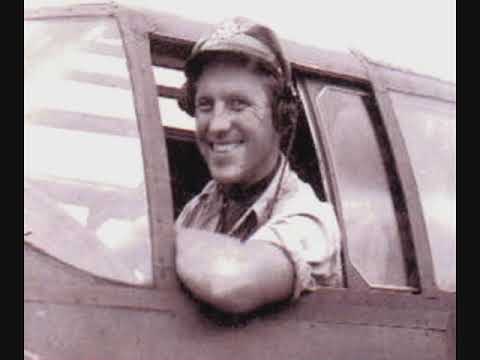
This is Roman's own telling of his path overseas with his original crew — the "Apache Princess" — and the men who flew it: Sergeant Weinstein, Sergeant Suddreth, Sergeant Kennedy, and a navigator replaced just before the Pacific crossing by Warrant Officer Arnold, a qualified celestial navigator. It's also the story of the "Lazy Daisy Mae," the aircraft that carried Roman, Belvin Robin, and the rest of that October 28, 1944 crew into the Philippines — and which was lost about ten weeks later, on a mission supporting the Lingayen Gulf landing.
"We had two P-38 fighter squadrons flying cover — Charles Lindbergh was one of the pilots, flying with the 433rd Fighter Squadron. He wasn't an Army Air Force pilot; he was a civilian technical representative for Lockheed. He didn't have authorization to fly combat missions, but the officials generally looked the other way."
Roman also tells the story of reconnecting, in 2001, with Linda — the daughter of Lieutenant Raymond Welch, the pilot he flew his very first combat mission with. Welch had died decades earlier without Linda knowing much about his war service; a chance conversation with Jay Moore at a 345th Bomb Group reunion sent her to Roman, and the two families have stayed close ever since.
The story closes with a roll call of Roman's flight-school class, 44A — naming each man and whether he survived the war. It's a striking piece on its own, and could work well as a standalone memorial feature if you ever wanted to build one.
[This is a condensed excerpt for the sketch — the full page would carry more of the story alongside the video, as already sent to Bernard for review.]
← Back to Roman Ohnemus